Wednesday, October 16, 2013

1st Grade Impressionism Fall Trees

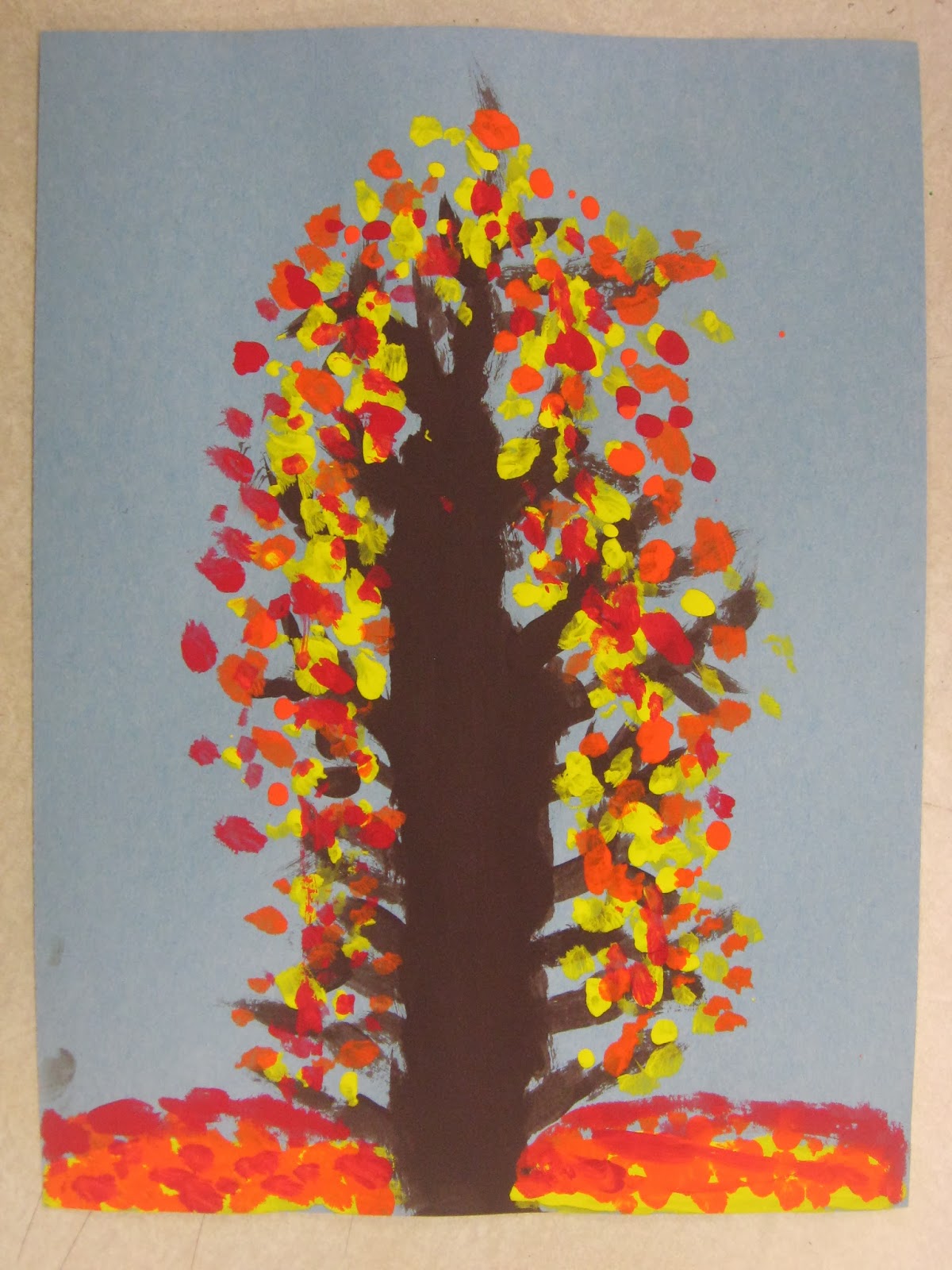
At the very beginning of this school year, my 1st grade students did a line study of a tree, learning how to control the brush. The thickest line in the tree was the tree trunk, which required painting over and over again to make it thick. Then, medium lines were added for branches; and finally, with the very tip of the brush, the students added tiny twigs.

Then, I shelved the project for two months, thinking we could finish them in the fall. I didn't really have a plan, but this week, I decided to try some Claude Monet-style Impressionistic painting. It went really well! I am so happy with these beautiful trees. I really had to encourage the students to make a "cloud" of leaves around all of the branches, instead of just dotting leaves right on the branches.


Wednesday, October 9, 2013

Artist of the Week

I posted recently that my school is doing a fundraiser called Art to Remember. All of my students spent the last few weeks creating art for A2R. I was really happy with how the program went, because I was able to teach normal, standards-based, art history-infused lessons. I just had to use their "special" paper, and when I ran out, I cut our regular art paper (a similar weight) to the same size and used that. This way, most of my students were able to create 2 works of art, and pick their best. Some classes even had a choice of over 3 works of art!

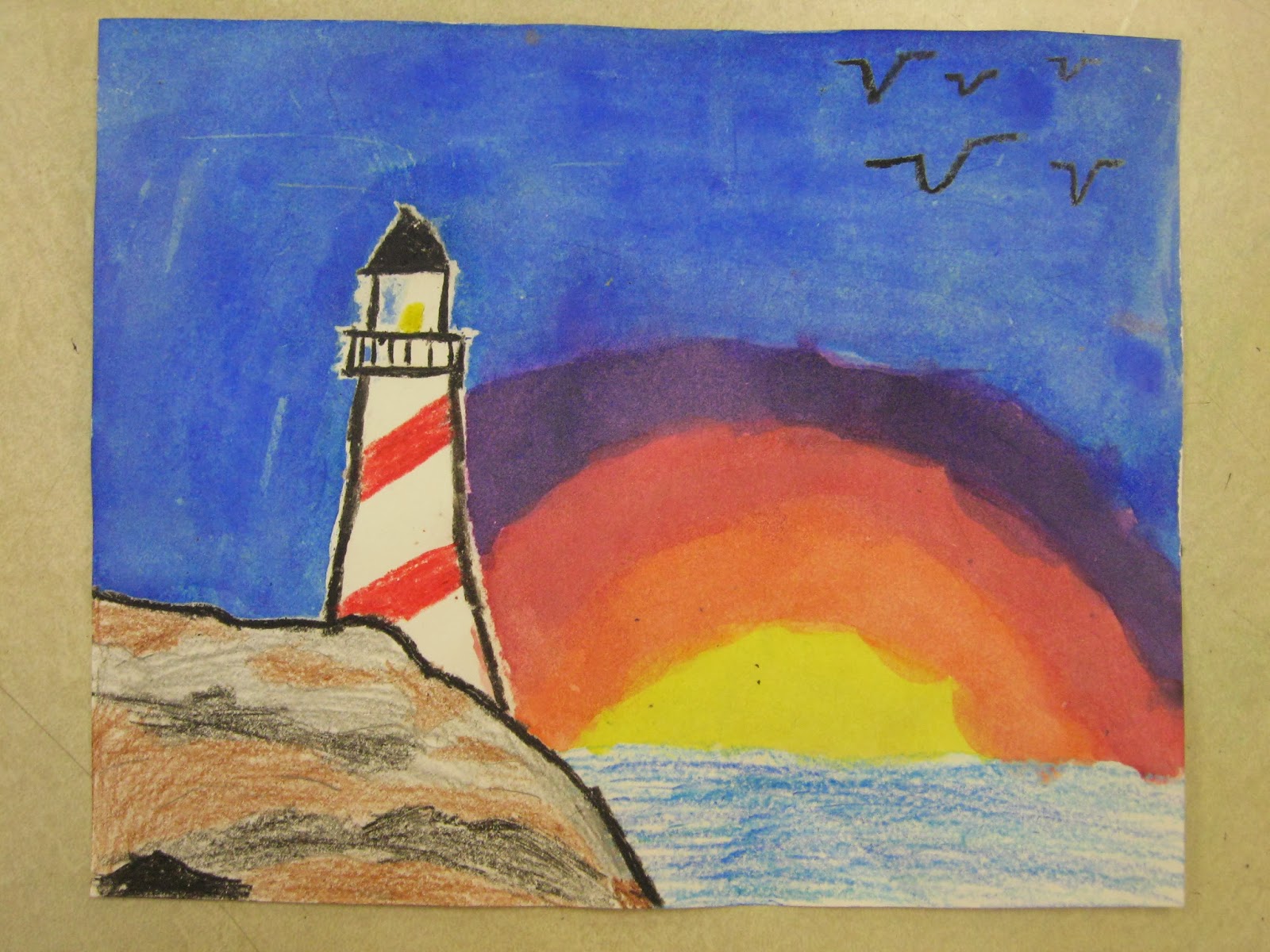
The only down-side was, once we sent the art in, every student's best piece was gone....and I had nothing to put in my display case for "Artist of the Week". Until one of my very talented 4th grade students stayed after school to finish his lighthouse, which he'd put so much detail in that he didn't get done in class. Boy was I happy to see him! Here is his piece, which didn't make it into my lighthouse post since he didn't get done until a week or two after everyone else.


Monday, October 7, 2013

Kindergarten Hand-Print Fish

At the beginning of my teaching career, I steered away from hand-print art, because I wasn't sure there was any artistic merit in it. But, what better way is there to introduce the fine art of printmaking than to start with printing a hand? Also, parents love these; their kindergarten children's hands won't stay this size for long!

If anyone has an opinion on hand-print art, please comment and tell me what you think. I'm interested in how other art teachers have used hand prints, if at all, and what art concepts you taught in the lesson.


Wednesday, October 2, 2013

An Ocean Painting

Last year, I taught my 6th grade students about contrast with warm and cool colors. We created ocean paintings inspired by Drew Brophy. The students used black crayons to outline their waves before mixing various cool colors for the ocean and warm colors for the sunset. This year, I tried Sharpie markers for the black outlines. I didn't notice any overall improvement in the students' work with Sharpie as opposed to black crayon. With Sharpies, if the students paused while drawing a line, it would result in a dot on the line as the ink bled out. But with crayons, the students really had to apply pressure to make the lines dark. However, one painting really stood out to me this year. The student who created this has done an outstanding job on every art project since I began teaching at this school. I wanted to share it on my blog because I think it is beautiful!


Monday, September 30, 2013

Animals in their Environment

While showing J. J. Audubon's blue heron, I asked my students what kind of habitat the heron may live in. In most classes, the first answer was by the water! There is just a little bit of water in the bottom left and bottom right of the painting,  but my students generally found it quite quickly. Then, I asked my students if any of them had seen a blue heron before. The ones that had shared where. By grandpa's lake, by the river on a canoe trip, by the creek behind the farm, and by the pond were common answers. J. J. Audubon's painting does show us the blue heron's habitat, but it doesn't show us exactly what kind of water the bird is by. I suggested to the students that perhaps the artist didn't want to be specific about what kind of water, since blue herons can be found by lakes, creeks, streams, ponds, and other bodies of water.

Then, we discussed Audubon's aesthetic choices in putting the environment he did in the painting. Then, I suggested other animals, and asked what kind of environment would be realistic and make a nice picture. For example, a butterfly could be fluttering across the sky, hovering over flowers, or sitting on a leaf. All of those ideas work, but as an artist, which one is the most aesthetic choice? We had some discussion about different animals' habitats.

Then, the students chose an animal to draw, and chose an environment to put it in. They could use markers or crayons for this. I had about 40 different animal photographs the students could draw from. Many of the photographs had bland backgrounds (i.e. a toucan sitting on a brown branch with a brown background), but the students knew the photograph was just for reference, and they were to create their own beautiful environment for the animal.

If the students wanted to draw an animal that I didn't have a photo of, I sometimes printed it for them from the internet, but I also told some students to draw from their imagination if they knew the animal very well.

This lesson was done with grades 3, 4, and 5. The main purpose was to create artwork for Art to Remember, a fundraiser I mentioned a few posts ago. The lesson was very successful over all, and most students created something they were proud of that was beautiful. Most children like animals, and have a favorite animal, so the students' level of interest was pretty high.



Thursday, September 26, 2013

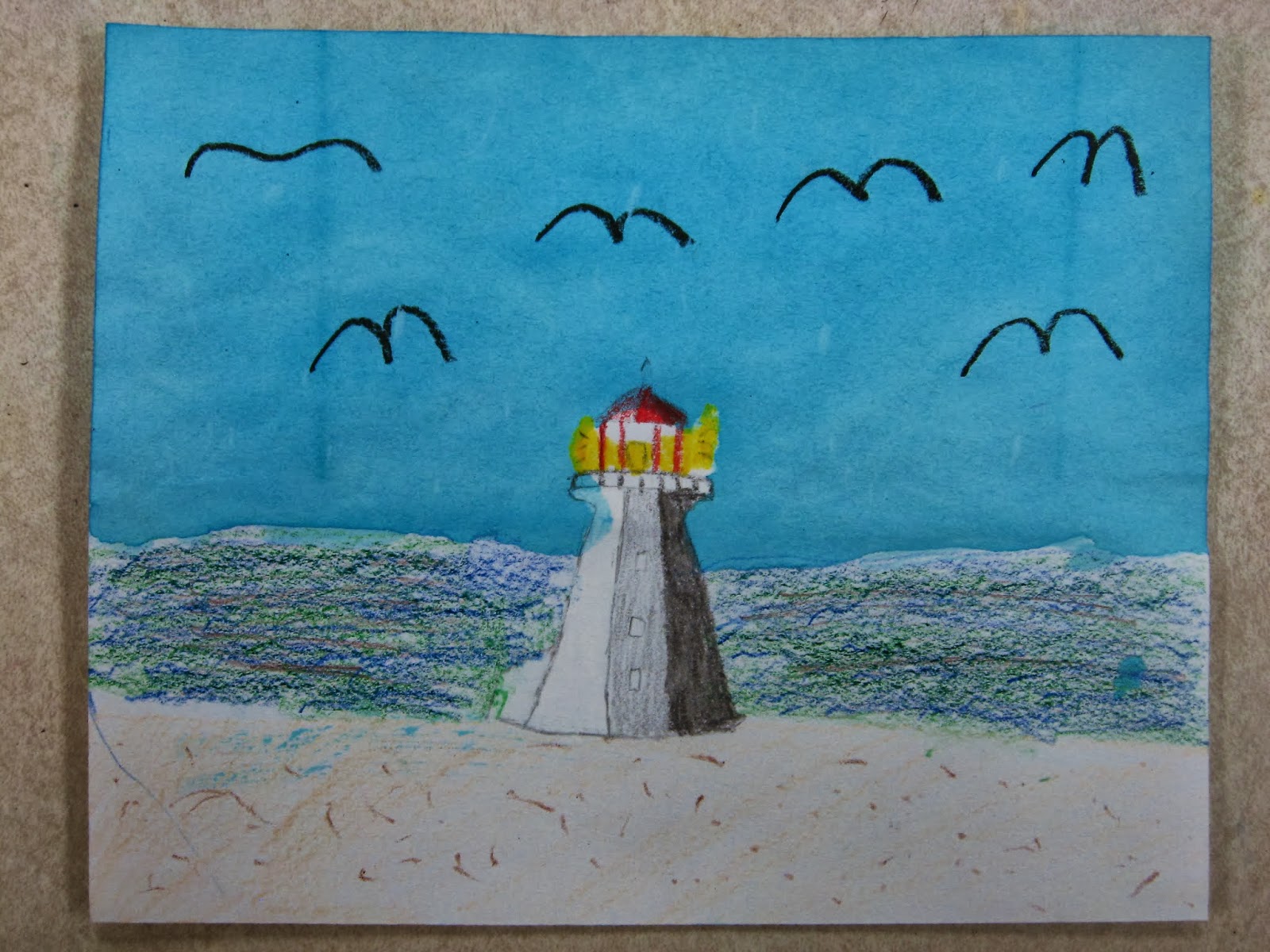
4th and 5th Grade Lighthouses

My 4th and 5th grade students have been working on lighthouse art. They drew the lighthouse, land, and water with crayons, and then used a choice of watercolors or watercolor pencils for the sky. Some students also used a light watercolor wash over their ocean to fill in white spots. I didn't work as much art history into this lesson as I would have liked (anyone know of a famous artist who painted lighthouses?), but we hit a lot of elements and principles of art on this project!